
Your anaesthetic
There are three options. Decided with your surgeon and anaesthetist, based on the procedure and your health.
The three options
-
Intravenous sedation
Also called twilight sedation. Sedative medication goes in through a small cannula in a vein. You keep breathing on your own, stay deeply relaxed, and most patients remember very little or nothing afterwards. Commonly used for wisdom teeth removal, surgical extractions, dental implants, bone grafting, and for patients with dental anxiety.
Recovery approximately 1 to 2 hours · escort home required · no driving until the following day
-
Target controlled infusion
An advanced form of intravenous sedation. A specialised pump holds the sedative at a steady, precisely controlled level, so the depth of sedation stays consistent and can be adjusted to you as the procedure goes on. You stay deeply relaxed and keep breathing on your own. Commonly used for complex wisdom teeth surgery, multiple dental implants, bone grafting and longer procedures.
Recovery approximately 1 to 2 hours · escort home required · no driving until the following day
-
General anaesthetic
You are completely asleep for the whole procedure and feel none of the surgery. A small breathing tube may be placed at the back of your throat while you are deeply asleep, and it is removed as you wake. You may go home the same day or stay overnight for observation, depending on the procedure. Used for jaw surgery, jaw joint surgery, facial trauma and reconstruction, salivary gland surgery, children needing surgery, and cases brought here by visiting surgeons from other practices.
Recovery approximately 2 to 4 hours before discharge · escort home required
Sedation and general anaesthesia at the centre are given and monitored by a specialist anaesthetist. Whichever option you have, your surgeon also numbs the surgical area with local anaesthetic.
The centre provides the theatre and the anaesthetic. For the procedures themselves, your surgeon's practice explains what is involved.
How sedation works here
Sedation at the centre is given as a target controlled infusion (TCI). A pump delivers the sedative continuously and holds it at a steady level, rather than giving it in single doses. The level is adjusted as your procedure goes on, so it can be kept where it needs to be for you.
What to expect on the day
These steps are for sedation. A general anaesthetic follows the same sequence, with oxygen given by mask.
-
01
Meeting your anaesthetist
Your anaesthetist meets you beforehand to discuss the plan for your sedation and go over the consent form.
-
02
Into the theatre
You walk into the operating theatre and lie down on the operating table, which is firmer and thinner than a typical bed.
-
03
A final check
The team confirms your personal details, your allergies and your medical history as a last check before starting.
-
04
Heart monitoring
Three small stickers go on your chest to monitor the electrical activity of your heart.
-
05
Blood pressure and oxygen
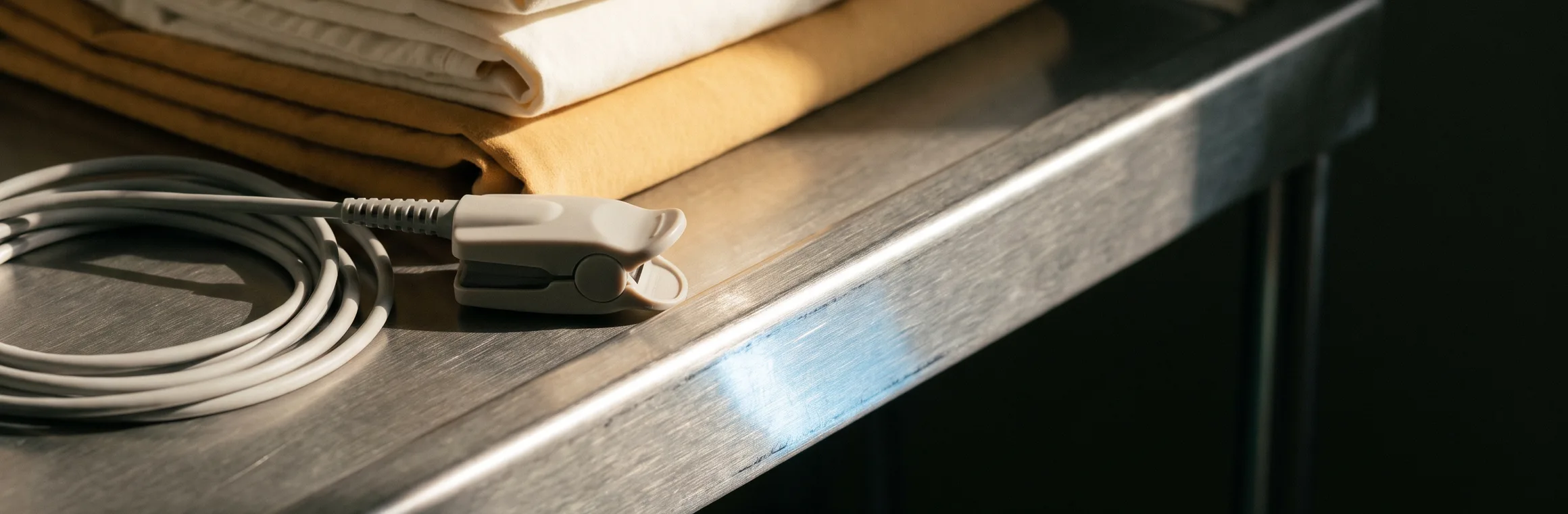
A cuff on your arm measures your blood pressure. A small clip on your finger monitors your oxygen levels and heart rate.
-
06
The cannula
While the monitors go on, a small tube is placed into a vein. Oxygen is given through two small tubes at your nose.
-
07
Feeling sleepy
The sedative goes in through that tube from the infusion pump. You feel relaxed and sleepy within a few minutes.
-
08
Monitored throughout
Your anaesthetist watches your breathing, blood pressure, heart activity and oxygen levels for the whole procedure.
Waking up and recovery
Once your anaesthetist is satisfied that you are recovering well, you move through to the recovery room. The transfer is often done in a wheelchair, because you will be unsteady on your feet. A recovery nurse stays nearby, can give you any medication you need, and can answer your questions.
- After sedation
- Approximately 1 to 2 hours in recovery before you go home.
- After a general anaesthetic
- Approximately 2 to 4 hours before discharge. You may go home the same day or stay overnight for observation.
- Getting home
- A responsible adult has to take you home and stay with you afterwards.
- Driving
- Not permitted until the day after your procedure.
Risks and side effects
In the absence of significant pre-existing medical conditions, sedation is considered very safe and general anaesthesia extremely safe.
- Nausea and vomiting
- The most common side effect. It may affect under 10% of patients after target controlled infusion sedation and up to 20% after a general anaesthetic. Your anaesthetist gives anti-nausea medication to reduce the risk.
- Drowsiness
- On waking you will feel dizzy and drowsy for about 15 minutes, and it is common to feel sleepy or fatigued for several hours after that. No driving, machinery, important documents or alcohol for 24 hours.
- Sore throat
- Where a breathing tube is used it can leave you with a sore throat. This may affect 10 to 20% of patients after a general anaesthetic. It is usually mild and settles within a few hours.
- Bruising where the cannula went in
- Mild bruising or tenderness where the intravenous cannula was inserted. This usually resolves within a few days.
- Converting to a general anaesthetic
- On rare occasions it becomes clear during the procedure that converting your sedation to a full general anaesthetic is the safer course, and the clinical team takes that step because it reduces the overall risk. Recovery and the risks afterwards are the same as for sedation, though a breathing tube may leave you with a sore throat.
- Allergic and unexpected reactions
- Allergic reactions and unexpected responses to medications are rare. Serious life-threatening events are very uncommon in healthy patients, and after a general anaesthetic they occur in fewer than 1 in 3,000 anaesthetics.